
The Most Common Summer Lawn Diseases in Illinois (And How to Treat Them)
When the intense heat and humidity of an Illinois summer arrive, the conditions become perfect for fungal lawn diseases to thrive. Does your once-vibrant green grass suddenly have yellow rings, brown patches, or bleached spots? If so, you are likely dealing with a turfgrass disease.
Many homeowners mistake these diseases for drought stress or insect damage. However, watering a fungus or applying insect control will only make the problem worse. To help you protect your yard, we have outlined the three most common summer lawn diseases in Illinois and exactly how to diagnose and treat them.
1. Brown Patch
What does Brown Patch look like?
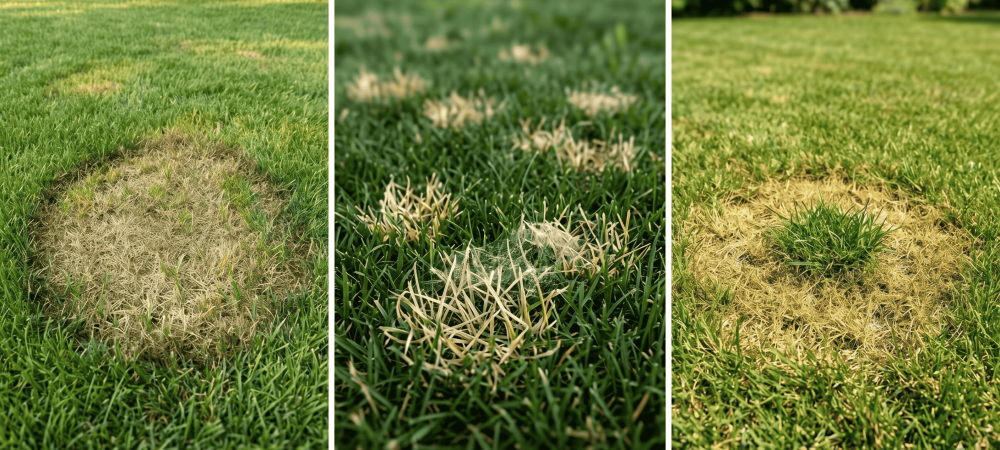
Brown Patch looks exactly as its name suggests: large, circular, or irregular areas of brown, blighted grass that can grow several inches to a few feet wide. If you look closely at the grass blades early in the morning when the dew is still present, you might notice a dark, smoky ring (or "smoke ring") around the edge of the dying patch.
Why did my lawn get Brown Patch?
Your lawn likely developed Brown Patch due to hot, humid weather combined with excessive moisture and heavy nitrogen levels. Over-fertilizing in the heat of the summer or watering your lawn late in the evening creates a damp, sticky environment where this fungus flourishes.
How do I treat Brown Patch?
To treat and prevent Brown Patch, you need to adjust your watering and feeding habits. Water deeply but infrequently, and only in the early morning so the grass blades dry out by evening. Reduce nitrogen applications during peak summer heat, and ensure your lawn has proper air circulation through core aeration.
2. Dollar Spot
What does Dollar Spot look like?
Dollar Spot looks like small, sunken, bleached-out circles in your grass that are roughly the size of a silver dollar. Over time, these small spots can merge into larger, straw-colored patches. You may also notice a white, cobweb-like fuzz (mycelium) on the grass on dewy mornings. If you examine an individual blade of grass, you will see tan, hourglass-shaped lesions with reddish-brown borders.
Why did my lawn get Dollar Spot?
Unlike Brown Patch, your lawn likely got Dollar Spot because it is under-fertilized and deficient in nitrogen. This fungus feeds on hungry lawns and thrives when the grass remains wet for extended periods due to poor drainage, heavy dew, or frequent shallow watering.
How do I treat Dollar Spot?
Maintaining a proper, balanced fertilization schedule is the best defense to help your lawn outgrow Dollar Spot. Keep your grass cut higher (around 3 to 4 inches) to promote deeper, more resilient roots, and switch to an early-morning, deep-watering schedule.
3. Summer Patch
What does Summer Patch look like?
Summer Patch commonly forms a "frog-eye" pattern in your yard—a ring of dead, brown grass with a tuft of healthy green grass remaining in the center. The spots usually range from a few inches to a foot in diameter. Unlike the other two diseases, Summer Patch attacks the grass roots rather than the leaf blades. If you pull up a handful of affected grass, the roots will look dark and rotted.
Why did my lawn get Summer Patch?
Your lawn is showing signs of Summer Patch now because of a hidden infection that started in the wet, cool days of spring. The visible damage does not appear until the turf is highly stressed by the hot, dry weather of July and August. It frequently strikes lawns with severe soil compaction and thick thatch layers.
How do I treat Summer Patch?
Because Summer Patch is a root disease, managing thatch and soil compaction through routine core aeration is crucial. Fungicides can be effective, but they must be watered deeply into the root zone and are most successful when applied preventatively in the spring before the summer heat triggers the damage.
Protect Your Lawn with Professional Lawn Disease Control
Healthy, well-aerated, and properly fertilized soil is your best natural defense against summer turf diseases. But if a fungus has already taken hold in your yard, professional lawn services will treat it and stop it from spreading to the rest of your healthy grass.
If you suspect your grass is suffering from a disease, reach out to Green Concepts today for an expert diagnosis and a tailored treatment plan.